
Much like rural communities, a community assessment is not one-size-fits-all. There are many ways to conduct a community assessment: purpose, people involved, timeframes, targets, etc. Typically, community assessments do follow somewhat of the same framework. At least the ones focused on community-first planning and action. The framework looks something like this:
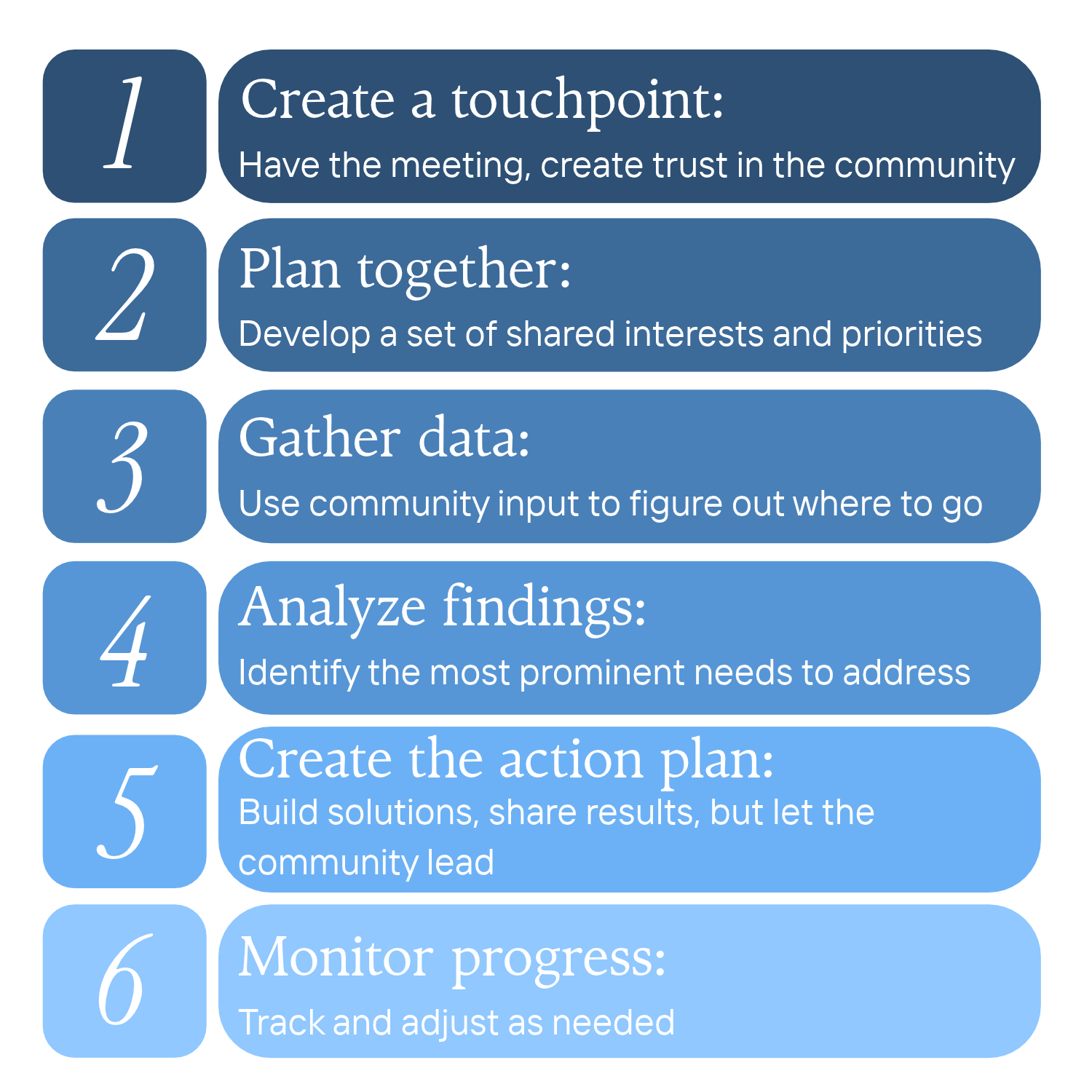
Expecting a survey form or a detailed checklist? Although those are also community assessments, they have a much different goal than what we are aiming for. We prioritize putting the community members, their thoughts, needs, and priorities, first. If we used a predetermined list of top climate risks in the United States and had community members rank them on an online form, we would miss out on the most important part of the process. Building relationships, being present, and actually listening to our focus community members is the entire reason we can do what we do at Rural Confluence.
In our last blog post, we talked about how each community feels climate risks differently, and therefore, each community needs a specialized plan. One of the most important things about a community is its identity. The culture, history, and everyday life of a community alter how its residents think about and handle climate risks, and we like it that way. If every community were truly one-size-fits-all, individual identities would cease to exist.
Our approach to climate resilience is to partner with communities invested in building and maintaining resilience. First, we meet community members where they are to establish a baseline understanding of their climate resilience approaches, determine their priorities, challenges, and existing resources, and help create a space for community members to collaborate, share ideas, and build relationships. Then, we develop research projects to explore the priorities and needs of our focus communities and share the findings. Together, we create an action plan, giving community members active roles in building climate resilience.
Throughout the process, we are building long-lasting, trustworthy collaborations. Trust between our team and community members creates ownership because we are just as invested in climate resilience successes as our community members. Our community-first, relationship-centered approach creates sustainable avenues to climate resilience so community members can carry out the co-developed action plan alongside our team. As we plan our formal exit from communities in the project’s final year, we have not only helped create a plan to tackle issues important to the community, but also sustainable partnerships. The Rural Confluence Project is temporary, but the relationships, collaborations, and partnerships are permanent.
By focusing on the issues and challenges community members identify, our approach is to put the power in the hands of community members, but also create strong, lasting relationships so we can continue to assist community members in building climate resilience, not tell them how to do it or carry it out for them.